
Templates Guides
Landscaping Service Contract: Free Template + What to Include
 Landscaping

A landscaping service contract protects both sides of the deal when the details are put into writing. These agreements are essential in the trade, whether it’s a weekly mowing route, a one-time cleanup, or a multi-season maintenance plan, and each type carries its own expectations.
Without one, a missed mow or an ambiguous pricing structure can easily lead to conflict.
This guide covers:
The main components of a landscaping service contract
What a landscaping service contract is and when you need one
What to include, from scope of work and pricing to weather provisions and warranties
How to write one, step by step
Best practices that keep contracts clear and disputes rare
How ServiceTitan supports contract management, from proposals to invoicing
Whether you’re drafting your first lawn care contract or tightening up one you already use, this guide gives you the language and structure you need to build a clear agreement.
Grab our free landscaping service contract template, then use the sections below to fill it in the right way.
» Want to grow your landscaping business? Click here to get a demo.
Free Landscaping Service Contract Template
Our free, downloadable template gives you a starting point for a landscaping service contract that you can customize for your business and customers.
The template includes fields for:
Landscaping company information
Customer information
Property address
Services included
Service frequency
Contract start and end dates
Pricing and billing frequency
Payment terms
Weather and scheduling provisions
Additional services and change orders
Cancellation and termination terms
Warranties
Liability and insurance
Signatures and dates
A written contract with these clauses sets expectations upfront, so a customer knows exactly what they’re paying for and when work will happen. It also gives your business something to point to if a disagreement comes up later.
You can edit these sections to match your specific lawn care services, pricing structure, and local requirements before sending it to a customer.
The #1 newsletter for the trades.
What is a Landscaping Service Contract?
A landscaping service contract is a written agreement between a landscaping company and a customer that lays out:
The services being performed
The property they apply to
The schedule and pricing
Who’s responsible for what
It’s the document both sides can refer to when there’s a question about what was actually agreed upon.
These contracts address a wide range of services. A weekly mowing route, a seasonal cleanup, or a full landscape installation all benefit from the same kind of written agreement, just with different terms inside.
Recurring maintenance contracts tend to focus on frequency and duration. That is, how often the crew shows up, what’s included in each visit, and how long the arrangement runs.
One-time project contracts lean more on scope and timeline. So, what work gets done, by when, and what happens if conditions change along the way.
The common thread is that neither side is left guessing.
A customer knows what they’re paying for and when to expect the crew. A landscaping business knows what it’s committed to delivering and has something to reference if a customer later says, “That’s not what we agreed to.”
Without a contract, that conversation usually happens after something’s already gone wrong, like a missed visit, a price dispute, or a scope disagreement. With a clear contract, you can settle those disagreements before they escalate.
What to Include in a Landscaping Service Contract Template
Here’s what each section of a solid landscaping service contract should address.
Contractor and customer information
This section should include the legal names, business names, addresses, phone numbers, and email addresses of both parties.
Scope of landscaping services
Describes every landscaping service included, such as mowing, edging, pruning, fertilization, removing weeds, applying mulch, planting, irrigation, leaf removal, or seasonal cleanup. It should also specify what’s excluded to prevent misunderstandings.
Service schedule and frequency
States when services will be performed and how often, such as weekly mowing, monthly treatments, or seasonal aerating.
Contract term and renewal
Covers the start and end dates, whether the contract automatically renews, and how either party can change or end the agreement.
Pricing and payment terms
Specifies the service price, billing frequency, accepted payment methods, due dates, deposits, late fees, and any additional charges.
Materials and equipment
Explains which materials, plants, fertilizers, chemicals, or other supplies are included and who’s responsible for providing or paying for them.
Weather and site conditions
Describes how rain, snow, extreme temperatures, drought, or unsafe site conditions may affect scheduling and whether missed services will be rescheduled.
Additional work and change orders
Outlines how work outside the original scope is requested, approved, priced, and billed.
Warranties and guarantees
This states whether the contractor provides warranties for plants, materials, workmanship, or completed installations, and what conditions or exclusions apply.
Cancellation and termination terms
Covers how either party can cancel the contract, required notice periods, and whether cancellation fees or other charges apply.
Signatures and approval
Includes signature and date fields for both parties, confirming their agreement to the contract terms.
Once you know what goes into a contract, the next step is putting it together in the right order.
How to Write a Landscaping Service Contract
A good landscaping contract is specific, easy to read, and built around the concrete work being performed instead of a generic template. Here’s how to put one together, step by step:
Identify both parties: Start by listing the contractor’s and customer’s information, then add the property address.
Describe the property and areas to be serviced: Note the property’s size, layout, and any specific zones or features the work applies to, like the front yard, backyard, common areas, and so on.
Define the scope of work: List each service the contractor will perform, such as removing weeds, and clearly state what’s not included.
Set the service schedule: Outline how often services will be provided, the seasonal schedule, and how weather or access issues may affect the timing.
Establish pricing and payment terms: Include the agreed price, billing schedule, payment deadlines, and any fees for additional work.
Define materials and responsibilities: Clarify who supplies the materials and how the contract addresses utilities, site access, or existing property conditions that could affect the job.
Address weather and access issues: Define how rain, extreme temperatures, or blocked access will be handled, including whether missed visits get rescheduled or skipped.
Explain how additional work will be handled: Specify that work outside the agreed scope requires customer approval, and explain how changes are documented and billed.
Include cancellation and warranty terms: Outline the notice required for cancellation, the circumstances under which either party can terminate the contract, and any applicable fees.
Review and sign the agreement: Confirm that the scope, pricing, schedule, and responsibilities all reflect what was initially agreed on before both parties sign and date the document.
Best Practices for Landscaping Service Contracts
Let’s see how a well-written contract holds up in practice. These habits keep contracts clear and disputes rare:
Be specific about the scope of work: List services by name rather than broad categories. ‘Lawn care’ leaves too much open to interpretation, whereas ‘weekly mowing, edging, and blowing off hard surfaces’ doesn’t.
Clearly identify areas included and excluded: Note which parts of the property the contract covers, like the front yard, backyard, and easements. Then specify anything left out, such as a section under construction or a neighbor’s shared fence line.
Define service frequency: State exactly how often each service happens. ‘Regular visits’ can mean a lot of things, but ‘every other Tuesday, April through October’ is clear.
Ensure pricing and payment terms are in writing: Spell out the price, billing schedule, and payment deadlines in the contract so they won’t get lost in a separate email or verbal agreement.
Account for seasonal and weather-related changes: Note how the schedule adjusts for winter months, drought restrictions, or storm delays, so a missed visit doesn’t turn into conflict.
Getting these details right upfront can help keep customers satisfied and willing to come back for repeat work.
How ServiceTitan Helps Landscaping Businesses Manage Service Contracts
A signed contract is only the starting point. Turning that agreement into scheduled visits, accurate billing, and a paper trail you can manage with ease is where most landscaping businesses run into friction, especially if they’re juggling a vast number of active contracts at once.
Aspire, part of the ServiceTitan family of solutions, is a cloud-based business management platform that allows you to scale smoothly.
Estimation and proposals
With estimating tools and customizable templates, teams can prepare proposals for recurring maintenance and other landscaping services without starting from scratch each time.

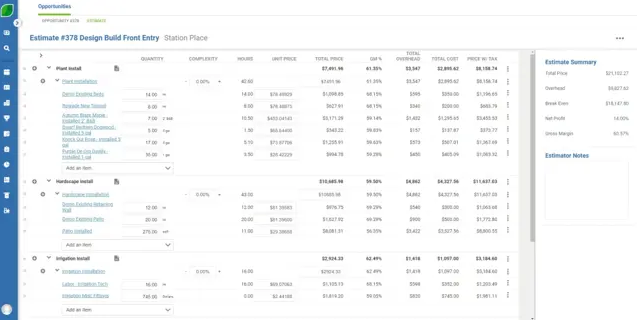
Once a proposal is approved, the information can feed into the wider operational workflow, reducing duplicate data entry and helping teams deliver the work they priced.
Scheduling and dispatching
Recurring contracts mean recurring work, and every visit must happen on time. Aspire’s scheduling tools enable managers to assign jobs to the right crews, coordinate workloads properly, and adjust schedules as priorities change.

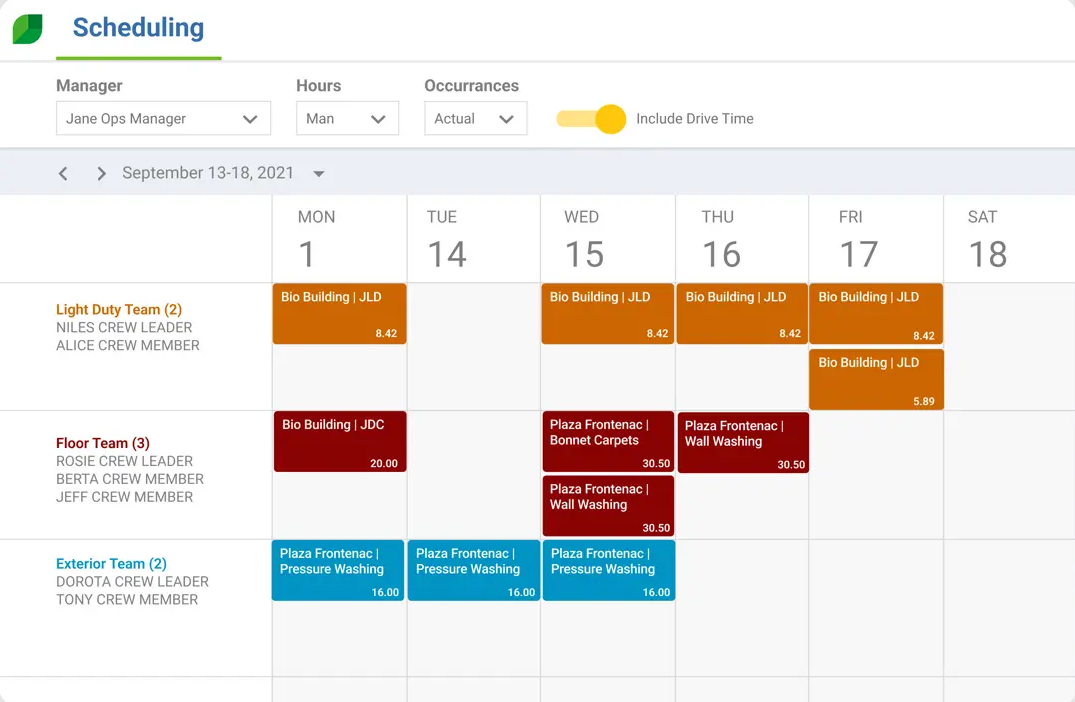
In addition, with property information and job details available in the same system, office teams get a clearer picture of upcoming work and help crews arrive prepared.
Invoicing and billing
Accurate billing starts with accurate job records. Aspire links field reporting, time and material tracking, and job information with its financial workflows so you can prepare invoices based on actual work performed.

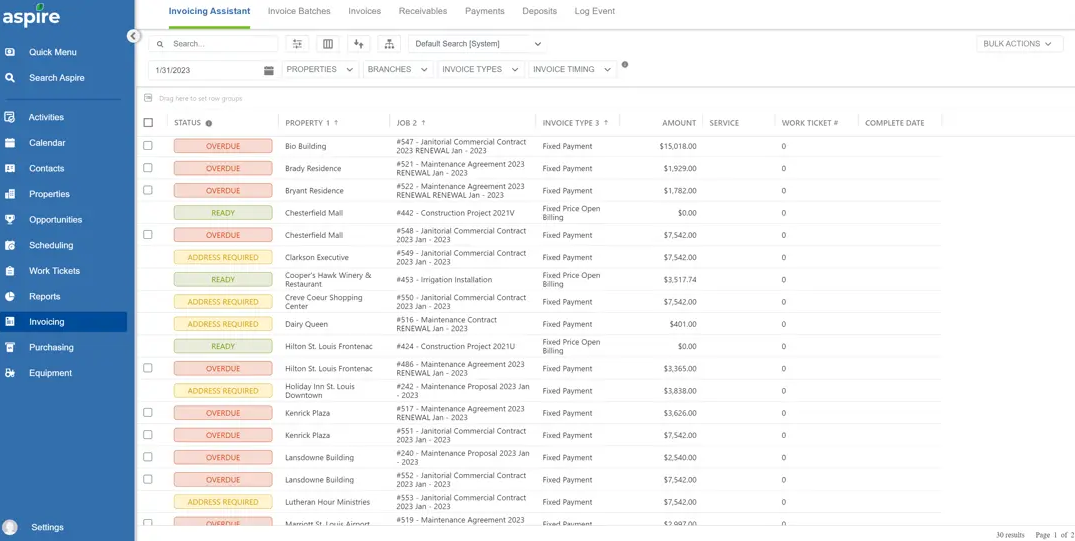
This also makes it easier to review outstanding billing, monitor costs, and reduce the administrative back-and-forth that slows down contract management.
Reporting and job costing
Knowing how much work your teams complete is useful. Knowing whether that work is also profitable is even better.
Aspire provides job costing and reporting tools that landscaping businesses use to compare actual labor, material, and other costs against estimates.

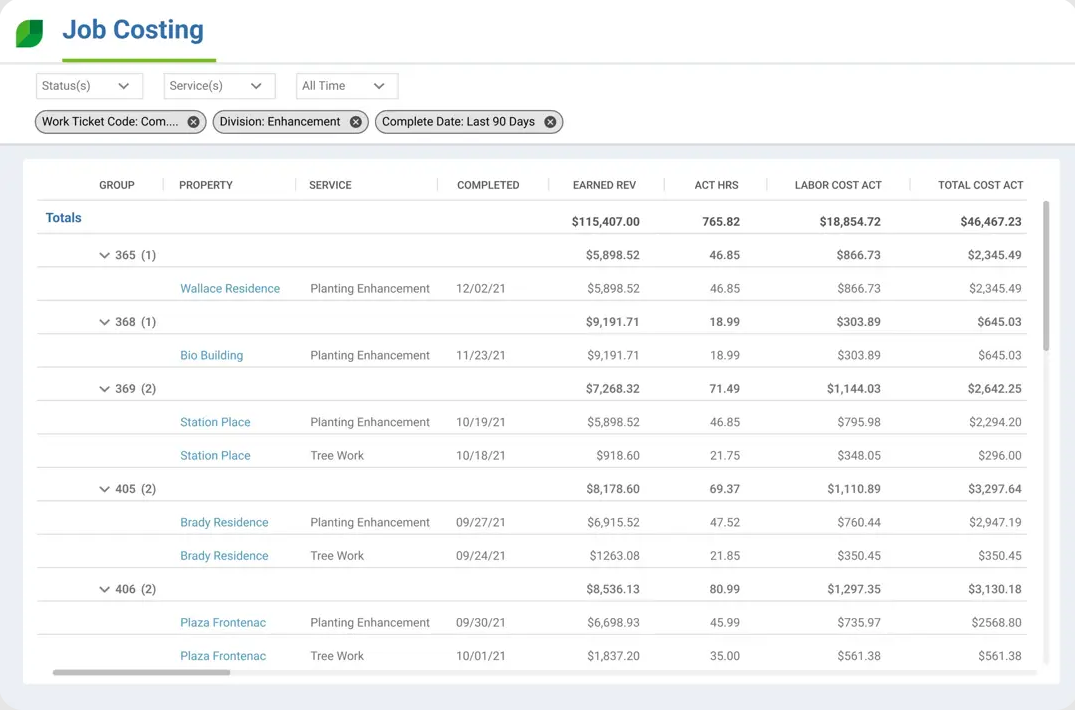
Managers use these insights to identify jobs that are running over budget, refine future bids, and make more informed decisions about contract renewals and growth.
Customer and property management
Aspire brings customer and job information together with financial data, scheduling, and field reporting to give teams better visibility across their accounts.

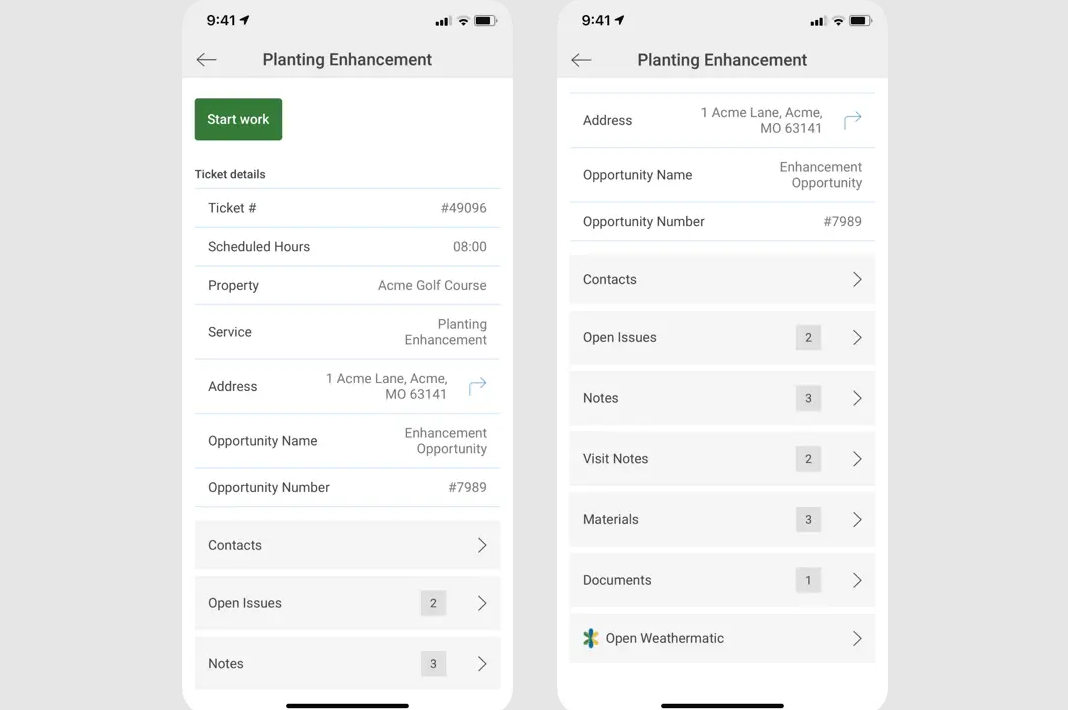
For businesses managing a large portfolio of properties, this centralized view makes it easier to coordinate recurring services, keep office and field teams aligned, and maintain more consistent service as the business grows.
Over to You
A clear landscaping service contract protects your business and sets the right expectations with every customer, whether it’s a one-time cleanup or a multi-season maintenance plan. Download our free template, fill it out for your next job, and use it as the baseline for maintaining positive client relationships.
ServiceTitan helps residential and commercial contractors run their businesses with software built for the trades. As part of the ServiceTitan family, Aspire Landscape Business Software helps you handle everything from estimating and scheduling to tracking job costs and profitability.


Frequently Asked Questions (FAQs)
Here are a few common questions about landscaping service contracts, answered.
Q1. Can I use the same landscaping contract for residential and commercial customers?
You can use the same base template, but the details usually differ.
Commercial contracts, much like a construction contract, often involve larger properties, stricter liability and insurance requirements, and more formal approval processes.
Adjust scope, pricing, and terms according to governing law, rather than reusing one contract as-is.
Q2. How long should a landscaping service contract last?
It depends on the work.
One-time projects need only a defined start and end date. Recurring lawn maintenance contracts commonly run for a full season or a year.
Renewal terms let both sides know when the agreement needs to be revisited.
Q3. What is the difference between a landscaping service contract, a service agreement, and a landscaping proposal?
A proposal outlines suggested services and pricing before work begins.
Once accepted, it can become the basis for a contract or service agreement.
The latter two terms are often used interchangeably, but the point is that they both formalize the scope, schedule, pricing, and responsibilities the parties are committing to.
