





The roofing industry is full of jargon—it’s everywhere, from contracts to project specifications, online tutorials for new techniques, and material usage instructions.
As a professional roofer, it’s important to know and reinforce your knowledge of these terms.
In this guide, we’ll explore the various roofing terms and explain each in simple terms.
» Want to grow your business? Click here to get a demo.
Why Is It Important to Know Roofing Terms?
It ensures you stay up-to-date with building codes and manufacturer instructions to deliver high-quality customer service.
Other reasons include:
Clearer contractor-client communication: Using the correct roofing terms makes it easier for customers to understand your diagnosis and solutions. This prevents misunderstandings and strengthens trust.
More accurate estimates and proposals: Knowing the terms used for roofing measurements lets you accurately estimate the materials needed, labor costs, and delivery timelines.
Efficient team communication: A thorough understanding of roofing terms makes it easy to communicate effectively with team members, suppliers, and other tradespeople, ensuring full alignment on every roofing project.
Better supplier and manufacturer relations: Knowing roofing terms makes it easier to order the correct roofing materials, ensure they meet the required specifications, and follow the usage instructions.
Professionalism and credibility: Using the right roofing terms shows you’re experienced and knowledgeable in the field of roofing, fostering trust with clients and team members.
The Ultimate Glossary of Roofing Terms (Alphabetical List)
Below is a list of the top roofing terms, arranged alphabetically.
A
Algae stains: Ugly black streaks that appear on roofs after blue-green algae die. They diminish the roof’s appearance, leading to premature aging.
Architectural shingles: Also known as laminated or dimensional shingles, they’re twice as thick as traditional ones, making them more durable.
Asphalt roof cement: Asphalt-based cement used to temporarily fix minor roofing issues such as leaks, detached shingles, nail pops, and small cracks.
Asphalt shingles: Roofing materials composed of fiberglass, asphalt (for waterproofing), basemat, and mineral granules.
Attic: A space or room directly below the roof of a building. They are usually used to store things such as holiday decorations, keepsakes, and sports equipment.
Attic ventilation: An airflow system used to regulate the temperature and moisture levels in the attic, lowering air conditioning costs and elongating the roof’s life.
Apron flashing: A special material of water-resistant metal or steel used to direct water away from roofing joints.
Air barrier: A system of materials used to control the air flow in and out of a building, preventing temperature fluctuations and ensuring indoor comfort.
Adhesive strip: A self-adhesive that connects adjoining shingles together after prolonged exposure to sunlight, providing a water-tight seal and enhancing wind resistance.
B
Ballast: A roofing system where gravel holds the membrane, particularly on flat or low-sloped roofs.
Battens: Long pieces of wood that provide the anchor point for shingles and roofing tiles.
Base flashing: A part of a two-piece flashing system installed along vertical surfaces, like the chimney and roof, to prevent water from entering the roof deck.
Blistering: This is a vertical protrusion on shingles that occurs when the sun's heat causes the moisture or gas trapped in the shingle to expand.
Boot flashing: A special flashing used to seal the area around pipes extending out of the roof.
Built-up roofing: A roofing system consisting of three to five alternating layers of asphalt (or bitumen) and ply sheets, with the top-most layer consisting of protective granules. They are used to increase durability and reflect heat.
Bundle (shingles): A package of shingles that can cover 100 square feet of roof.
Butyl tape: A flexible tape used to seal roofing areas that vibrate or move, such as metal roofs.
Box gutters: Rectangular-shaped gutters installed on roofs and used to redirect water away from the building. They are commonly found in commercial and historical buildings.
Bargeboards: Fascias installed at the roof’s gable end, below the eaves. They boost the roof’s aesthetic appeal and protect the timbers from wind, rain, and other weather elements.
Bird Stop: Also known as eave closure, it’s a metal or plastic piece installed in the eaves of tile roofing systems to prevent birds or other animals from entering to nest.
C
Cap Flashing: A metal covering (aluminum, copper, or galvanized steel) placed above the base flashing where the roof meets with a vertical surface, like a chimney.
Cap Sheet: A roofing material placed on the topmost layer of a multi-layered roofing system. It improves the roof’s durability and protects the underlying layers from weather elements.
Caulk: A sealant used to seal joints and cracks to prevent leakages.
Chalking: It’s either snapping a taut string dipped in chalk on a roof to create a straight visible line for aligning shingles. It’s also a powdery residue that forms on roofs due to weathering.
Chimney Cricket: A rectangular sloping structure built behind a chimney that diverts water away and prevents the accumulation of ice or snow.
Cold Roof: A roofing design where ventilation is provided between the insulation and the roof deck to prevent damage from moisture buildup.
Collar Beam: A beam that runs horizontally to connect two parallel rafters.
Coping: The process of using a protective material to cover the exposed surface of vertical or parapet walls on a roof.
Coverage (Shingle Overlap): Refers to the way shingles are layered on top of each other to protect the roof against weather elements.
Cutout: The slots on conventional three-tab shingles.
The #1 newsletter for the trades.
D
Decking (Roof Deck): A structural sheath installed directly on the frame where roofing shingles or tiles are attached. It’s typically made of plywood, oriented strand boards (OSB), planks, or metal.
Deflection: The degree to which a roofing structure sags or curves downward due to the weight of the roofing materials or snow.
Dormer: A structure with a window that projects out of a sloping roof.
Drip Edge: A corrosion-resistant flashing installed at the roof edges to redirect water and allow run-off away from the building’s walls and foundation.
Downspout: A vertical pipe for channeling rainwater away from the gutters to the ground.
Double Coverage: A roof installation method where two shingles are placed over the same deck area.
Dry-in: Refers to the stage when the roofing structure is impermeable to weather elements. This means the decking and underlayment have been installed, and the areas around the chimney, vent, and skylight have been sealed.
E
Eaves: The overhanging roof areas that project beyond the building’s walls. They direct water away from the walls and foundation.
Eave Flashing: Ice and water shield or metal flashing installed where eaves intersect with the building’s walls. They prevent water from leaking into the eaves from the roof decking, especially in cold climates.
Edge Vent: Vents installed along the overhanging edges of a roof, allowing air inflow and outflow from the attic space.
Elastomeric Coating: Special liquid applied to roofing surfaces that solidifies to become a waterproof membrane.
End Laps: Describes the place where two roofing panels overlap at the end of a run.
Exposure (Shingle Overlap): The portion of a shingle that’s not covered by the one above it.
Expansion Joint: Gaps intentionally left to accommodate movements caused by temperature differences and movement of the building.
Exhaust Vent: A vent designed to remove odors, moisture, stale air, pollutants, and steam from inside a building.
F
Fascia: A long flat board installed along the edges of a roof, just behind the gutter.
Fasteners: A mechanical object—a nail or bolt—used to join two roof components together.
Felt Paper: An underlayment placed between the roof deck and the shingles. They provide extra protection against moisture.
Fiberglass Shingles: Shingles made from fiberglass mats.
Fire Rating: A metric for describing how fire-resistant a roof covering is. There are three fire ratings: Class A, B, and C.
Flat Roof: A roof that’s almost or entirely level.
Flood Coat: Pouring adhesive and gravel over a BUR roofing system.
Flue: A pipe that channels smoke and gases from the furnace or fireplace.
G
Gambrel Roof: A type of roof with two symmetrical slopes on either side.
Gable: The vertical wall between the two sloping sides of a gable roof.
Gable Vent: A vent installed at the peak of a gable roof used to channel air in and out of the attic.
Galvanized Flashing: Steel flashing coated with zinc installed at various roof areas to prevent water from seeping into the building.
Gutter: Strips composed of metal, vinyl, or other materials installed along the eaves to catch rainwater and direct it away from the building’s walls and foundation.
Granules (on shingles): Little asphalt pieces applied to the top of roofing shingles, protecting them from weather elements.
Green Roof: A roofing system covered by growing plants.
Gutter Apron: A metal strip installed beneath shingles, meant to direct water from the roof into the gutter.
Gutter Guard: A mesh-like material installed over gutters to prevent leaves and other debris from accumulating and blocking the flow of rain water.
H
Hail Damage: Dents on roofing shingles caused by hailstones.
Hand Sealing: The process of applying sealants (roofing cement) to shingles.
Heat Welding: Joining roofing materials with heat or hot air.
Hip Roof: Roofs where the four sides slope sharply downward toward the walls.
Hip Shingles: Shingles covering the joint between two slopes of a hip roof.
Heat Loss: The estimated quantity of heat energy that leaves the building via the windows, doors, walls, and roof.
Headlap: The degree to which a tile overlaps another below it.
High-Slope Roof: Roofs with very steep slopes.
Hot Mop: This involves adding multiple layers of substances, such as asphalt, to protect the roofing system and increase its durability.
Hybrid Roof: A roofing system that blends features of cold and hot roof construction.
I
Ice Dam: A buildup of ice that forms on a roof’s edge, blocking melting snow from draining off. This results in water leaking into the ceilings, walls, and insulation.
Ice and Water Shield: This is a waterproof, self-adhering underlayment used in roof areas prone to damage from ice and water damage.
Impact-resistant shingles: Special roofing shingles made from durable materials such as asphalt or fiberglass. They are designed to withstand hail, wind, and debris.
J
Jack Rafter: A shorter rafter that supports the roof in places where the design changes. It connects a hip or valley rafter to the wall plate, ensuring good load distribution and roof stability.
Joists: These are weight-bearing beams that run parallel to each other and provide a structure that supports the roof’s weight.
J-Channel: A J-shaped metal trim used for clean finishing around the edges of windows, doors, and the siding perimeter.
K
Kickout Flashing: A type of flashing installed at the intersection between the roof and wall. It directs water away from the wall into the gutter.
K-Style Gutter: A K-shaped gutter that provides a decorative finish to residential and commercial buildings.
Knee Wall: A short wall about 3 feet high that supports the roof rafters in attics and rooms with sloped ceilings.
Knockout Plug: A detachable roof section, such as a vent or pipe flashing.
L
Laminated Shingles: Also known as architectural roof shingles, these are visually appealing durable, double-layered asphalt shingles.
L-flashing: A protective barrier installed beneath the shingles of a roof. It prevents water infiltration in areas like the valleys and chimneys.
Load-bearing capacity: This is the maximum amount of weight that a roof can bear without failing.
Low-slope Roof or Flat roof: A roof type with a pitch of less than 2 vertical units for every 12 horizontal units.
Loose Laid Membrane: A roofing membrane that is laid loosely on the roof deck with a layer of gravel, pavers, or concrete slabs.
Louver: A thin, waterproof material installed to redirect water from vulnerable areas of the roof.
Leak Barrier: A thin, metal waterproof material installed to redirect water from vulnerable areas of the roof.
M
Mineral-Surfaced Roofing: Roofing products that have been treated with mineral granules to improve longevity, storm resistance, and UV resistance.
Moisture Barrier: A waterproof layer designed to resist moisture penetration, dampness, and leakage within the roof structure.
Mop-and-Flop: A roof application method used in multi-layered and bitumen-based roofing where the roofing material is kept upside down and heated tar or adhesive is applied directly underneath it. After the tar has set in, the roofing sheet is laid in place.
Mylar Coating: A type of reflective coating applied to roofing materials for improved structural resilience, UV resistance, and to reduce cooling costs.
N
Nail Base: As the name implies, this is an underlay that stops water vapor from escaping from the interior of the building to the exterior and secures roofing materials. This reduces the risk of water absorption in the roof.
Non-Vented Roof: A roof design without ventilation openings.
Nesting (Shingle Install Method): A shingle installation method that involves butting the top of new shingles against the bottom of the old shingle’s exposed lower portion. This is used to install new asphalt standard shingles over new ones.
Non-Vented Roof: A roof without vents.
O
Open Valley: A roofing valley that extends beyond the building’s exterior and is uncovered by shingles.
Overlay Roofing: A roofing technique that involves adding another layer of shingles on an existing roof without removing the old one.
Overhang: The portion of the roof that extends beyond the building’s walls.
P
Parapet Wall: This refers to the low protective wall along the edge of a roof.
Pitch: A measure of a roof’s steepness.
Pitch Break: A transition in roof design where the pitch of the roof changes.
Ponding Water: Accumulation of water that remains on the roof for over 48 hours, resulting in roof damage and leakage.
Positive Drainage: An intentional roof design where the roof surface is sloped to redirect water from the roof into the drainage system. This prevents water damage and roof leakage.
Power Vent: A fan installed on a roof to regulate heat and moisture levels.
Q
Quarter Round (trim): A 90-degree-shaped metal gutter used to complete the edges where the roof intersects with the wall or other structures.
Quick-Setting Sealant: This is a type of adhesive material that dries quickly. It’s best for sealing leaks or joints within a short time.
Quoin (architectural corner feature): A type of finishing detail placed at the edge or junction of the roof to reinforce the corner and also for decorative purposes.
R
R-Value: A measurement of the roofing material’s ability to resist heat transfer.
Rafters: These are beams that form the supportive structure of the roof. Rafters support the roof and distribute the weight evenly to the walls of the building.
Rake Edge: The steep part of the roof that runs along the sides of the gable.
Ridge Cap: An integral component of the roofing system, installed to cover a roof’s peak to protect it against water infiltration.
Roof Anchor: A safety system installed on the roof to serve as a port for attaching personal protection equipment such as harnesses, hats, gloves, etc.
Roof Curb: A raised metal frame that is installed on the roof to elevate structures mounted on the roof. They play a major role in preventing moisture and ensuring proper drainage.
Roof Hatch: An opening that allows access to the rooftop, like a door leading to the roof area, and is essential for maintenance and inspection.
Ridge vent: These are vents installed along a roof’s ridge to ventilate the attic.
S
Saturated Felt: An underlayment material saturated with asphalt or bitumen to make it water resistant. It is a protective layer under the roofing shingles to resist wind, water, ice dams, and other weather conditions.
Self-Adhering Membrane: An adhesive material that sticks directly to the roof surface without additional fasteners or adhesives. This material is made of two layers: a top layer made of weather-resistant material such as bitumen and a self-adhesive layer.
Service Life: This is the lifespan of a roofing material, the length of time it takes the material to perform its function before it requires replacement or repair.
Soffit: The underpart of the roof extension that is over the eaves and connects the roof to the exterior wall of the structure.
Structural Panel: A type of panel that provides stability to a roof system.
T
Tapered Insulation: A type of insulation tapered at one end to create a gradual slope on a flat roof to improve water drainage.
Tar Paper: A waterproof protective sheeting saturated with tar or asphalt. It is used as an underlay between the roof deck and the final roofing material, such as shingles.
Thermal Expansion: The ability of roofing materials to stretch when subjected to heat and shrink when cooled.
TPO (Thermoplastic Polyolefin): A combination of polymers, rubbers, and fillers for improved durability and flexibility.
Trusses: A framework that supports the roof's structure.
U
Underlayment: A water-resistant material installed between the sheathing (roofing base) and shingles. It’s the secondary layer of protection against water, rain, and moisture.
Uplift Resistance: Refers to a roof system's ability to resist upward motion due to wind pressure. Winds cause a pressure disparity between the environment above the roof and inside the building, resulting in roofing sheets being lifted off the deck.
Utility Knife (for roofing work): A roofing tool used for cutting tasks during roofing.
UV Degradation: This is the degradation caused to roofing sheets by exposure to ultraviolet light (sunlight).
V
Valley: A V-shaped area where two slopes meet.
Vapor Barrier: As the name implies, it’s a water-resistant material designed to prevent moisture vapor from passing through a roof or wall assembly. It is usually installed on the interior side of the roof assembly.
Ventilation: The process of designing a system to allow air to circulate through the attic or roof space.
Vent Stack: A vertical pipe that extends through the roof and serves as a passage for sewage gases from the drainage system.
W
Walkway Pads: A special protective non-slip mat created on the roof to serve as a pathway for maintenance workers
Weep Holes: A small hole created in the ridge capping, walls, windows, or parapets of the roof to drain trapped water from the roof.
Woven Valley: A technique that involves applying shingles at a junction where two sloped roof sections meet, creating a valley. It serves both an aesthetic and protective function.
X
XPS (Extruded Polystyrene Insulation): A solid board padding formed through continuous molding. It provides thermal insulation, water resistance, and durability.
X-Seam (sealant technique): This is a sealant method used at the intersection of different roofing materials or between panels. It involves sealing the junction to prevent leaks or water infiltration.
Y
Yellowing (UV damage effect): This refers to the discoloration of roofing materials due to continuous exposure to sunlight. The roofing sheets begin to look yellowish due to the degradation of its integral structure.
Yield Strength (roofing material durability): The amount of pressure a roofing sheet can resist before becoming distorted. It helps determine the durability, weight-bearing capability, and structural integrity of the roofing material.
Z
Zinc Strip (used for algae prevention): A small narrow metal strip inserted along the roof’s ridge to prevent the growth of live plants like algae, mosses, and mildew.
Zinc Coating (for metal roofing): The process of adding a protective coat of zinc on steel to improve its durability and reduce corrosion. Steel roof sheets are very lightweight but easily prone to corrosion, so zinc coating serves as a protective barrier.
Z-Flashing: A metal edging used to channel water away from joints to prevent leak exposure, thereby increasing the lifespan of the roofing materials.
How ServiceTitan Helps Improve Communication in Roofing Businesses
New roofers with little professional experience may struggle to grasp all these terms at once. To ensure everyone is on the same page, leverage technologies like ServiceTitan to streamline communication.
More precisely, here’s what ServiceTitan can help roofing companies do:
Preload roofing terminology in estimates and proposals: Our estimates and proposals are automatically populated with roofing industry terminology, ensuring customers and crews understand job details and preventing confusion over materials, labor, and the scope of work.
Provide digital work orders and centralized documentation: ServiceTitan’s Field Service App stores all job details, measurements, and project instructions in one place. Roofing technicians can use these documents to familiarize themselves with roofing terms.

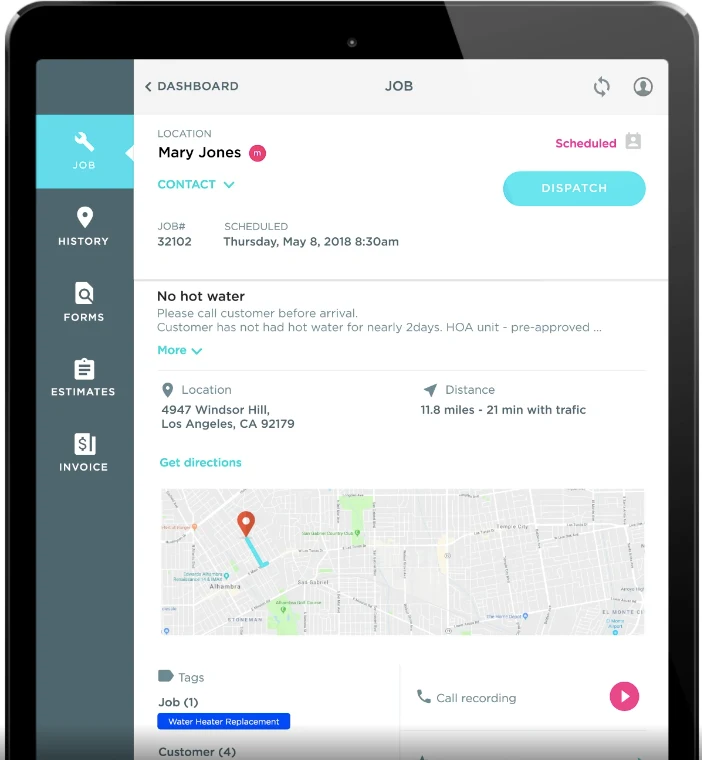
Technicians can access the homeowner’s entire work history and use gated workflows programmed into the application by their supervisor to determine the next step in the construction process.
This improves consistency and boosts service quality.
Photo and video annotations for clarity: Contractors can take pictures of the issues they encounter on a project, document their progress compared to the project’s key performance indicators, and show their final work. This ensures clear communication between field crews, office staff, and clients.
Beyond just streamlining communication, ServiceTitan offers tools that help you automate other roofing business tasks. This includes:
Material Procurement
To prevent project delays, roofers need to always have the necessary materials and tools available. However, that’s hard to achieve with spreadsheets and standalone inventory management platforms.
Spreadsheets don’t provide up-to-date and accurate inventory availability data. Plus, manually updating records whenever there’s an inventory-related transaction increases the potential for error and takes more time.
Standalone inventory management tools only partially resolve the issues posed by spreadsheets. That’s because you’ll still have to copy and paste data between platforms—a process that’s also error-prone and time consuming.
For this reason, we created an all-in-one roofing software with a built-in Inventory Management tool. This automates the inventory management process from start to finish.
Using the platform, warehouse managers can:
Access granular and indepth information about each inventory item, including its current and previous location, quantity, and total value.
Create templates for each location (truck or warehouse) defining the items to stock in each location, their respective minimum and maximum quantities, and the SKU (stock keeping unit).


As for techs, they can requisition a material in the field, setting the source as a vendor or the warehouse. Also, whenever they add material to an invoice or perform other inventory-related transactions, two things happen:
The item overview dashboard automatically updates; the total quantity and location columns change immediately to provide accurate up-to-the-minute inventory information.
ServiceTitan’s system compares the quantity of the material available against the minimum quantity set in the template.
If the quantity in the truck is lower than the preset minimum quantity, ServiceTitan will automatically trigger a replenishment from the warehouse.
But if the quantity in the warehouse is below the preset minimum, ServiceTitan will immediately notify the person in charge of procuring materials to create a purchase order.
FYI: The same workflow repeats when roofers set a vendor as the source when requisitioning materials and when account managers sell an estimate.
After creating the purchase order, the user can either print and mail it to the vendor, or email it directly without leaving the platform.
If they choose the latter option, ServiceTitan will help them track the purchase order, using the statuses:
Pending — Created but not sent.
Sent — The purchase order has been delivered to the vendor.
Partially received — The order hasn’t been completely fulfilled.
Received in full — The order has been completely fulfilled.
Canceled — The order was created but canceled.


This ensures that roofers always have the materials they need for each project, preventing delays and enhancing customer satisfaction.
Crew Scheduling
After solving the challenge of material availability, you need to assign techs to jobs and track their progress to get ahead of delays.
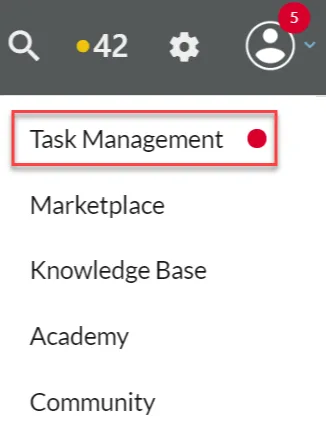
ServiceTitan’s Task Management tool lets you assign techs to jobs and specific action items, with automated notifications of the new assignment. You can then track their progress and communicate with them directly on the same interface.

Additionally, the Appointments feature lets you manage projects efficiently. Dispatchers can schedule technicians or entire crews (individually or in bulk) for multi-day jobs, weeks, or even months in advance.


When scheduling jobs for a project, ServiceTitan allows you to specify the lead technician and allows them to manage the technicians assigned to them, via the mobile app. Specifically, they can:
Dispatch team members
Mark them as arrived
Start and end their meal breaks
Pause the appointment and close out the job
This allows you to efficiently manage techs, without the headache of back-and-forth calls and messages.
Project Management
ServiceTitan’s Project Tracking platform lets you track each project. From the project summary table section, you can view the contract dates and timelines, tasks, status, supervisors, and crews—all in one interface.

Even better, every item updates in real-time whenever new data is entered into the system, such as when a material is purchased or a change order is created. This way, you save time instead of manually updating multiple spreadsheets.
Using the dashboard’s hyperlinks, you can access reports that provide deeper details about the project—including the financials, jobs, estimates, and work orders.
For example, the “Financials” section links to the actual versus budgeted costs table, which compares what was budgeted against what you’ve currently spent on each line item.


This table also updates in real time as you accumulate materials, labor, and equipment costs.
Clicking further provides a detailed breakdown of each line item, including their:
Source (technician that billed for those hours, the vendor or purchase order tied to the material expense item, etc)
Budgeted and actual costs
Variance from the budgeted amount in dollar terms
Percentage of budgeted amount used


No more updating multiple spreadsheets or switching between platforms to track your projects. Get all the details and financial insights you need in one place.
All the features we’ve covered above are a fragment of ServiceTitan's offerings. Our tool also helps you manage payments, invoice clients, build estimates and proposals, and track the performance of your employees. Schedule a call today to get a live, personalized walkthrough of how ServiceTitan can help you manage projects and implement SOPs.
Over to You
Considering that new techniques and tools are being added to the industry, it’s vital to always update your knowledge of roofing terms.
In addition, read glossaries and industry publications, listen to roofing podcasts, subscribe to newsletters, research the success of other roofing companies, etc. The bottom line is: dedicate time to learning new things.
While keeping up with industry knowledge is crucial, having the right tools to implement that knowledge is equally important. That’s where ServiceTitan comes in handy.
Book a demo today to discover how ServiceTitan can streamline your business operations.
ServiceTitan is a field service and marketing platform made for tradespeople, by a team that lives and breathes home services. ServiceTitan empowers your business to drive real results and boost revenue. Thousands of contractor shops nationwide trust the software.


ServiceTitan Software
ServiceTitan is a comprehensive software solution built specifically to help service companies streamline their operations, boost revenue, and substantially elevate the trajectory of their business. Our comprehensive, cloud-based platform is used by thousands of electrical, HVAC, plumbing, garage door, and chimney sweep shops across the country—and has increased their revenue by an average of 25% in just their first year with us.


